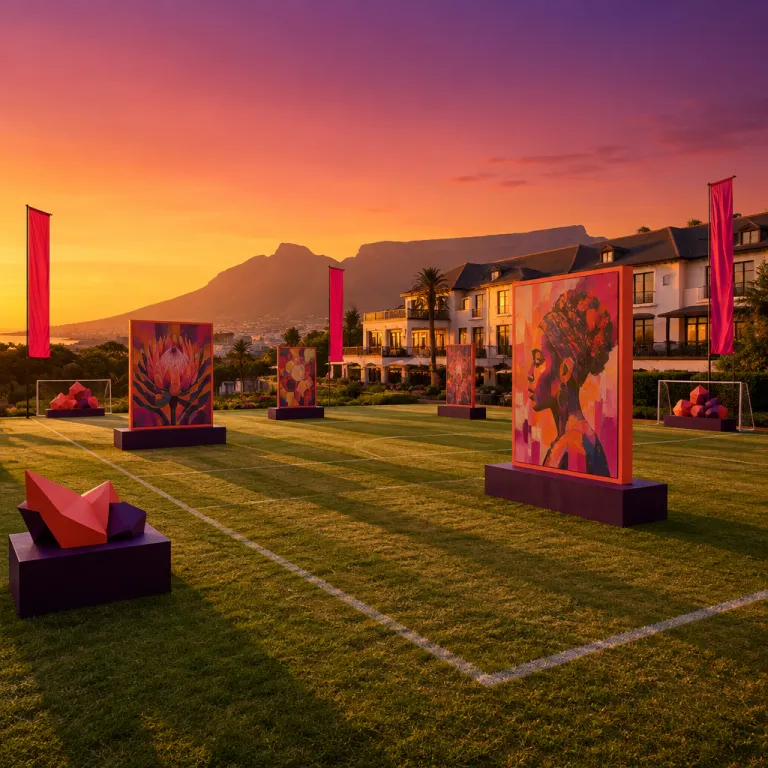
From lobby ornament to curatorial pitch
Walk into the leading luxury hotels in Cape Town today and the art is no longer background decoration. In many of these properties the sales pitch now starts with African art, not the thread count, and that shift has quietly redefined what a luxury hotel in the city can be. For travelers comparing art-led luxury stays in Cape Town, the question has become which property treats its collection like a gallery and which still treats it like wallpaper.
This evolution tracks Cape Town’s rise as a serious African art market hub within South Africa, with the city’s collectors, galleries and fairs shaping what appears on hotel walls and in every suite. Since the opening of Zeitz Museum of Contemporary Art Africa (Zeitz MOCAA) in 2017—an institution that welcomed more than 300,000 visitors in its first year—and the growth of fairs such as Investec Cape Town Art Fair, which drew over 25,000 attendees in 2024 according to its organizers, curators and hoteliers have begun collaborating more closely. Where a generation ago a hotel might have leaned on anonymous “ethnic” prints, today the better addresses commission work, document provenance and train their équipe to talk about it with authority. As front office manager Lindiwe M., speaking at a V&A Waterfront property in 2023, put it, “Guests now ask who made the piece above the bed before they ask about the pillow menu.” That is why African art now sits in the opening paragraph of many luxury hotel descriptions, right alongside the view and the proximity to the city’s main attractions.
For guests, this means that choosing between different hotels across the city is increasingly about curatorial personality rather than just location between the Atlantic Ocean and the City Bowl. Some travelers will gravitate toward the Silo Hotel’s bold, museum-adjacent drama, while others prefer the quieter residential feel of Ellerman House or the heritage charm of Cape Grace. Either way, Cape Town’s high-end hotels now compete on which collection best frames your stay, not only which royal suite has the largest terrace.
Cape Town’s art ecosystem and the rise of hotel collections
Cape Town sits at the southern tip of Africa, but in art world terms the city is now firmly central. A dense network of galleries, studios and fairs has turned the town into a year-round marketplace, and luxury hotels have moved quickly to plug into that energy. When you check into leading properties in Cape Town, you are effectively stepping into a curated cross section of South African creativity.
The presence of major institutions in the city, including Zeitz MOCAA near the V&A Waterfront, has made it natural for a silo-style hotel to lean into art as identity. Guests who explore the museum by day often return to a Silo Hotel room that echoes similar themes, with large-scale works anchoring the space and the Atlantic Ocean framed beyond. In this context, art-forward luxury hotels feel less like isolated properties and more like satellites of a broader cultural ecosystem stretching across the city.
For design-literate travelers who might split time between a stay in Cape Town and a refined wildlife escape such as a safari camp in the Timbavati Game Reserve, the contrast is striking. In the bush, nature is the gallery wall, while in the city the hotel room becomes the frame for Africa’s urban imagination. That is why many luxury hotels now work directly with galleries in Cape Town, ensuring that each suite, from entry level to royal suite, reflects current conversations in South Africa’s art scene rather than a frozen idea of “tribal” décor.
Afro modernist interiors versus imported minimalism
The most interesting art-focused luxury hotels in Cape Town have moved beyond hanging paintings and now treat the entire interior as a piece of design. Afro-modernist thinking runs through the furniture, textiles and lighting, often pairing clean lines with materials sourced along the Atlantic Ocean coast and inland winelands. This approach feels very different from the anonymous international minimalism that once defined many a luxury hotel room in the city.
In properties like Ellerman House, Mount Nelson under the Belmond flag, or the waterfront-facing One&Only Cape Town resort, you will notice how local craft softens grand architecture. A carved side table might echo the silhouette of Table Mountain, while woven headboards reference patterns from across South Africa and the wider continent of Africa. Even in historic hotels across the city, the best renovations now use African art and design to bridge heritage with present-day life.
For travelers using a curated resource such as this site’s own guide to interior design inspiration for discerning hotel guests, these details become part of the decision making. You might compare how a royal suite at Cape Grace layers textiles and ceramics against how a silo-style suite uses sculptural pieces to frame the view over the V&A Waterfront and the Atlantic Ocean. Either way, the point is that contemporary African art in Cape Town’s luxury hotels now shapes how the room feels underfoot and in hand, not just what hangs at eye level.
How to read the art when you check in
Design-literate guests arriving in Cape Town often ask how to tell whether a hotel’s art program is serious or superficial. The first step is to check whether works in the room and public spaces are labeled, with basic information about the artist, medium and origin within South Africa or the wider Africa region. In the stronger luxury hotels, this information is presented as confidently as the wine list or spa menu.
Next, pay attention to how consistently African art appears across the property, from lobby to every suite and even smaller corridors. If only the main public areas are dressed up while guest floors feel generic, you are likely seeing a marketing veneer rather than a fully integrated vision. By contrast, when a hotel has invested in art for each room category, from entry level to royal suite, it signals that the collection is part of the core identity.
Finally, listen to how the équipe talk about the works during your stay in Cape Town, whether you are at Ellerman House, Cape Grace, Mount Nelson or another of the leading hotels in the city. Staff at the best art-conscious luxury properties can explain why a particular piece hangs above the dining banquette or in your suite, and how it relates to the city or to South Africa more broadly. As Ellerman House concierge Sipho D., interviewed for an internal guest newsletter in 2022, noted, “We want guests to leave knowing at least one artist’s name they had never heard before.” That level of narrative depth turns a simple hotel stay into a kind of informal gallery tour, with the Atlantic Ocean and Table Mountain as ever-present backdrops.
Choosing where to stay when the art matters most
Once you start comparing Cape Town’s luxury hotels through this lens, the city’s accommodation map looks different. The Silo Hotel near the V&A Waterfront leans into its proximity to major art institutions, while Ellerman House in Bantry Bay feels like a private gallery perched above the Atlantic Ocean. Mount Nelson by Belmond and Cape Grace on the marina side each bring their own interpretation of Africa’s visual language into the luxury hotel format.
Location still matters, of course, whether you want a property close to the city’s dining scene or a quieter base for day trips along the Cape coast. A guest planning a coastal excursion, perhaps timing a whale watching day trip from a Cape Town base, might prioritize easy road access over direct V&A Waterfront views. Yet even then, the decision between different hotels across the city often comes down to which collection you want to wake up to before heading out under Table Mountain’s changing light.
For solo explorers and design-focused travelers, the most rewarding strategy is to treat the hotel as part of the cultural itinerary rather than a neutral backdrop. Spend time in the lounge between meals, ask about the art during check in, and notice how the room changes as the sun moves from City Bowl to Atlantic Ocean horizon. In a city where African art now shapes the very pitch of luxury hotels, the property you choose becomes one more gallery in your personal map of Cape Town and South Africa.
FAQ
Why has African art become central to Cape Town’s luxury hotels ?
African art has become central because Cape Town has grown into a major Africa-focused art hub, with galleries, fairs and institutions clustered around the city and the V&A Waterfront. Since the mid-2010s, the number of contemporary galleries has increased and events like Investec Cape Town Art Fair now draw thousands of visitors each year. Luxury hotels use curated collections to express a sense of place that imported décor cannot match. For many guests, the depth and quality of the art program is as important as the view of Table Mountain or the proximity to the Atlantic Ocean.
How can I tell if a hotel’s art collection is serious ?
Look for clear labeling of works in the room and public spaces, including artist names and origins within South Africa or the wider Africa region. Ask staff about the pieces during your stay in Cape Town and notice whether they can explain why specific works were chosen. In the strongest art-driven luxury hotels, the collection feels coherent from lobby to suite and is treated as part of the property’s identity, not just decoration.
Which Cape Town areas are best for art focused hotel stays ?
The V&A Waterfront and nearby Silo District suit travelers who want immediate access to major institutions and a museum-adjacent experience. Bantry Bay and the Atlantic seaboard, where Ellerman House sits, offer quieter residential streets with dramatic ocean views and gallery-like interiors. The City Bowl and Gardens area, home to properties such as Mount Nelson by Belmond, places you closer to galleries, dining and historic streets in central Cape Town.
Does focusing on art mean compromising on classic luxury features ?
In Cape Town’s leading luxury hotels, a strong art program usually comes alongside, not instead of, traditional comforts. You can expect high quality dining, attentive service and well-appointed suites whether you choose a waterfront property, a heritage house or a hillside retreat. The difference is that African art and design now shape how those familiar luxury elements feel, turning a standard room into a more layered experience of Cape Town and South Africa.
Is it possible to buy artworks seen in my hotel ?
Many art-focused luxury hotels in Cape Town partner with local galleries or directly with artists, and some pieces in rooms or public areas are available for purchase. Ask at reception or concierge, who can usually connect you with the relevant gallery or provide contact details. Even when works are not for sale, staff can often suggest nearby galleries where you can explore similar art during your stay in Cape Town.