From Table Bay to InterContinental: what changes for your stay
The transformation from the original Table Bay Hotel into InterContinental Table Bay Cape Town is not a cosmetic tweak. This R1 billion reinvention, led by IHG Hotels & Resorts in partnership with the V&A Waterfront and Sun International, turns a familiar harbourfront landmark into a contemporary flagship for Cape Town business and leisure travellers. According to IHG and Sun International project communications, the upgrade aligns the property with InterContinental’s global standards of service, integrated loyalty benefits and a sharper focus on curated experiences across the city.
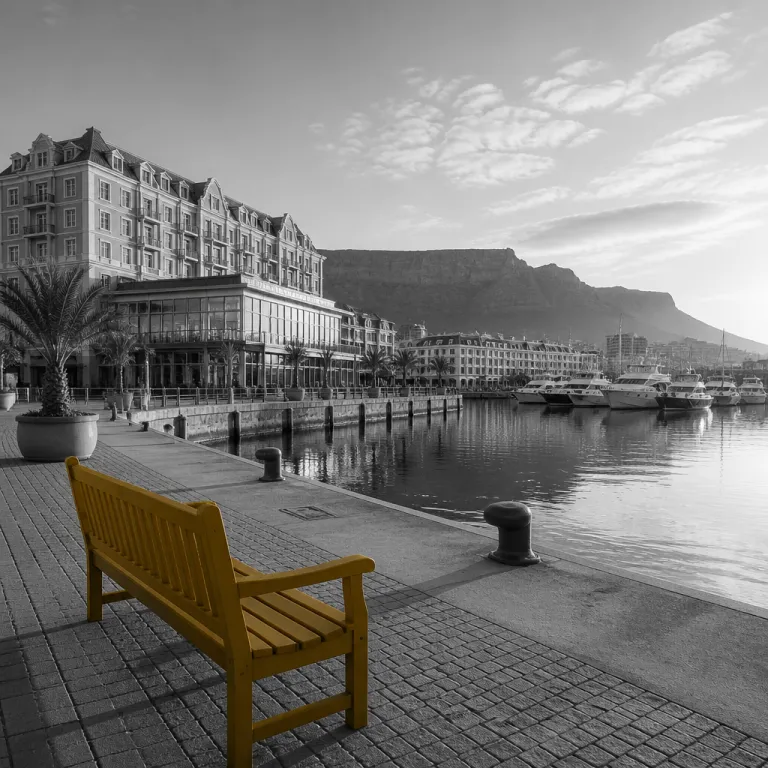
The property still occupies the same prized position on Cape Town’s waterfront, between the Victoria & Alfred basin and the working harbour, with Table Mountain framed behind the cranes. What has changed is the way the hotel uses that setting, from the glass lobby that now feels like a gallery for the mountain to the elevated pool terrace that opens the building to the Table Bay light and sea air. When guests check into the hotel today, they are entering the first InterContinental property in Cape Town, and that carries expectations around amenities, technology and service choreography that the previous incarnation never fully met.
InterContinental Table Bay Cape Town now offers 306 keys, including a significant number of new suites designed for longer stays and executive trips that stretch into weekends. Hotel statements indicate that 45 of these are newly created guest suites, adding more flexibility for couples, families and small corporate groups. The rate per room sits firmly in the luxury bracket, with typical nightly pricing often starting in the mid- to upper-range for five-star V&A Waterfront hotels, but the value equation has shifted thanks to upgraded amenities, a more intuitive front desk flow and a stronger sense of place in every room category. For travellers comparing hotels at the V&A Waterfront, this property now competes directly with lifestyle-led neighbours such as The Silo Hotel and One&Only Cape Town rather than relying on nostalgia for its past as a grand bay hotel.
Design language: glass, water and a harbour that feels lived in
Step into the lobby of InterContinental Table Bay Cape Town and the first impression is light. The double-height glass atrium frames Table Mountain and the working harbour, turning arrivals and departures into a slow theatre of cranes, clouds and the constant movement of Cape Town’s docks. Blue, wave-inspired interiors run from the lobby through the public spaces, echoing the curve of the bay and softening what could have been a hard-edged, purely corporate hotel.
The design team has kept the bones of the original property, so the building still reads as a grand Cape Town landmark rather than a generic international hotel dropped into South Africa. What has changed is the palette and the detailing, with lighter woods, textured fabrics and art that references both the Atlantic seaboard and the Cape Winelands rather than leaning only on nautical clichés. Rooms and suites now feel more like contemporary city apartments, with better lighting, more intuitive storage and a clearer separation between work, sleep and lounge zones.
Public areas have been reprogrammed to encourage guests to stay in the hotel rather than treating it as a mere base for the V&A Waterfront. The new pool deck and bar, set above the Victoria & Alfred Waterfront promenade, offers a rare elevated view of Table Bay and the working harbour in one sweep. Travellers interested in how Cape Town’s hospitality scene is evolving towards greener, design-forward properties can look at case studies such as Hotel Verde’s carbon-neutral experiment, which shows how sustainability and style can coexist in South Africa’s hotel sector.
Rooms, suites and amenities: how the hardware now serves modern travelers
The 306 rooms at InterContinental Table Bay Cape Town have been planned around the way guests actually move through a space on a business-leisure stay. Standard categories now feel generous, with better sound insulation, layered lighting and bathrooms that finally match the expectations set by the public areas of a leading Cape Town hotel. For those who need more room to breathe, the new suites add living areas that work as both private lounges and informal meeting spaces.
Every room category now integrates practical amenities that matter when you are arriving from Cape Town International Airport after a long-haul flight. Expect well-placed charging points, comfortable desks for late-night calls back to South African or overseas clients and blackout curtains that actually keep the morning light off your laptop screen. The fitness centre has been upgraded from an afterthought to a proper training space, with enough floor area and equipment to satisfy regular gym users rather than just ticking a box on the amenities list.
On the ground level, the front desk has been reconfigured to reduce bottlenecks at peak check-in and check-out times, with more staff positions and clearer queuing lines. Valet parking and secure on-site parking are handled just off the main entrance, so guests can move from car to lobby with minimal friction, while the concierge desk manages restaurant reservations across the V&A Waterfront and the wider city. Travellers weighing different neighbourhoods for their stay can contrast this waterfront address with the more residential energy of Sea Point, where properties like the carefully reviewed Beach Road hotel mentioned in local guides offer a different take on Cape Town’s coastal life.
Le Bistrot de JAN and the new social life of the hotel
InterContinental Table Bay Cape Town has always had the location, but the rebrand gives it something it never quite nailed before: a restaurant that stands on its own in Cape Town’s dining conversation. Le Bistrot de JAN, the in-residence project from Michelin-starred chef Jan Hendrik van der Westhuizen, is pitched as a destination in its own right rather than a convenient in-house option for hotel guests. That matters in a city where serious diners will happily cross town for a single plate of line fish cooked properly.
The room itself leans into intimacy rather than spectacle, with lighting and acoustics tuned for conversation rather than Instagram. Service is handled by a tight-knit équipe that understands both the expectations of international hotel guests and the more relaxed rhythm of locals who treat the V&A Waterfront as their extended living room. Menus change with the Atlantic and West Coast seasons, but the through line is a French-inflected reading of South Africa’s pantry, from Saldanha Bay oysters to Karoo lamb and Cape citrus.
Outside the restaurant, the hotel’s bar and lounge spaces have been rethought as a series of smaller, more flexible rooms rather than one cavernous lobby bar. That makes it easier to find a quiet corner for a pre-flight drink before heading to the international terminal, or to host an informal meeting without feeling like you are sitting in the middle of a shopping mall. The net effect is that the property now has a genuine social life, with locals using it as a meeting point and guests feeling less like they are passing through a transit hub and more like they are part of a Cape Town harbour community.
Loyalty, competition and how to choose between Waterfront hotels
For frequent travellers, the most significant shift in the move to InterContinental Table Bay Cape Town is the integration into the IHG Hotels & Resorts ecosystem. If you already collect points with the brand, this property instantly becomes one of the most compelling ways to redeem them in South Africa, especially when you factor in the new Executive Club floor and lounge. The IHG-branded club level gives regular guests a quieter breakfast option, all-day refreshments and a private check-in area that bypasses the main front desk queues.
When you compare InterContinental against other luxury hotels at the V&A Waterfront, the decision often comes down to how you plan to use the city. This property is ideal if you want to walk straight from your room to the Victoria & Alfred Waterfront shops, or catch the Robben Island ferry without crossing town by car. It also works well as a base if you are combining a few nights in Cape Town with a safari extension, perhaps at a lodge featured in a guide to a hidden Timbavati gem, because transfers to and from Cape Town International Airport are straightforward and the concierge is used to stitching together complex itineraries.
The competitive set is tightening, with lifestyle brands like the incoming Cape Town Edition bringing a different kind of energy to Table Bay. InterContinental Table Bay Cape Town answers that by leaning into its harbourside heritage, its upgraded amenities and the reassurance of a global loyalty programme that rewards repeat stays. Travellers who value predictable service, a strong sense of place and the ability to earn and burn points on every rate and room type will now find this reimagined property near the top of any serious Cape Town hotel shortlist.
Practical booking intelligence for InterContinental Table Bay Cape Town
Booking InterContinental Table Bay Cape Town starts with understanding how the property’s layout interacts with the geography of the city. Rooms facing Table Bay and the working harbour offer cinematic views of ships and cranes, while mountain-facing categories frame Table Mountain and the city bowl, which many guests prefer for sunrise light. When you check the hotel’s room descriptions, pay close attention to the view codes and floor levels, because they have a real impact on how your stay feels.
For business-leisure travellers, the sweet spot is often an Executive Club suite on a mid to high floor, which balances space, privacy and quick access to the lounge. These suites give you a separate living area for calls and meetings, a bedroom that stays uncluttered and access to club amenities that can offset the higher rate per room if you use them fully. Families or small groups may prefer interconnecting rooms on lower floors, which make it easier to move between the pool, the fitness centre and the Victoria & Alfred Waterfront promenade.
On the logistics side, the property offers valet parking and secure self-parking, both of which are worth using if you plan to explore Cape Town by car, from the Constantia Winelands to the Atlantic seaboard. Airport transfers can be arranged through the concierge, who will coordinate timings with your international flights and any onward journeys into the rest of South Africa. Before you confirm, always check InterContinental’s direct offers and compare them with trusted luxury travel advisors, as packages that include breakfast, club access or spa credits can significantly enhance the overall value of your stay at this reimagined bay hotel.
FAQ
When did InterContinental Table Bay Cape Town reopen after its renovation ?
The property is reported to have reopened in December as InterContinental Table Bay Cape Town after a full closure for refurbishment. According to the official project timeline cited in IHG and hotel communications, “The hotel reopened in December 2025.” Prospective guests should always confirm the latest details with the hotel directly, but this date broadly marks when travellers could first experience the upgraded rooms, public spaces and new brand standards under the InterContinental flag.
How many rooms does InterContinental Table Bay Cape Town have ?
After the R1 billion renovation, InterContinental Table Bay Cape Town offers 306 rooms and suites. Hotel statements indicate that this expanded inventory includes 45 new guest suites, giving travellers more choice between standard rooms, larger suites and club-level categories. The increased capacity helps the hotel accommodate both peak-season leisure demand and major business events in Cape Town.
Where exactly is InterContinental Table Bay Cape Town located ?
The hotel sits within the V&A Waterfront precinct in Cape Town, on a prime site between the working harbour and the retail and dining district. Its address places guests within walking distance of the Robben Island ferry terminal, the Victoria & Alfred Waterfront promenade and major shopping and dining options. The location also offers direct views of Table Mountain and Table Bay, making it one of the most recognisable waterfront properties in South Africa.
What are the key amenities for business travelers at this hotel ?
Business travellers at InterContinental Table Bay Cape Town benefit from high-speed connectivity, well-designed in-room workspaces and an upgraded fitness centre for pre- or post-meeting workouts. The IHG Executive Club floor and lounge provide quieter zones for informal meetings, breakfast and all-day refreshments, along with private check-in and check-out. Meeting and event spaces within the property are supported by a professional events équipe that understands the needs of international corporate groups.
Is InterContinental Table Bay Cape Town suitable as a base for wider South African itineraries ?
The hotel works well as a starting or ending point for broader South Africa trips, thanks to its proximity to Cape Town International Airport and its concierge’s experience with complex itineraries. Guests often pair a few nights here with time in the Cape Winelands, the Garden Route or safari regions such as the Timbavati, using the property as a comfortable urban anchor. Its location at the V&A Waterfront also makes it easy to fit in key Cape Town experiences, from Table Mountain to Robben Island, without long transfers.